
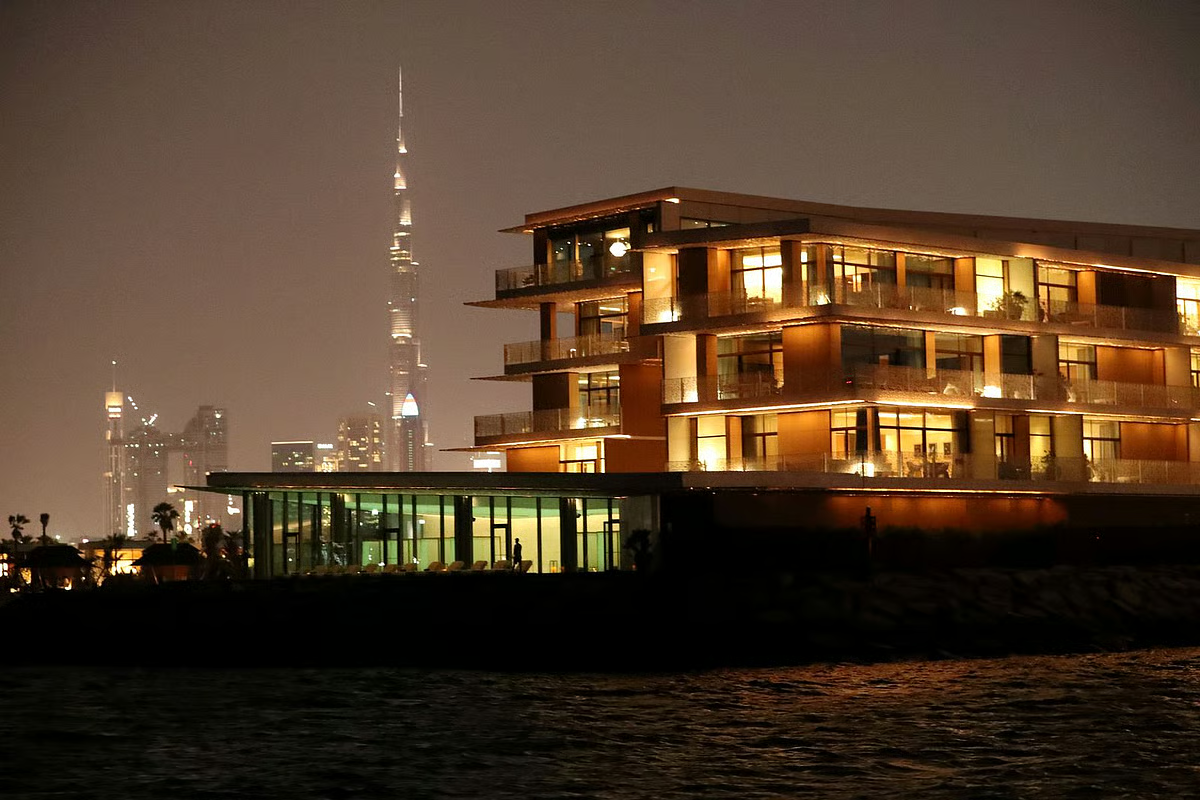
Dubai’s real estate sector is showing strong signs of health — especially at the top end. According to a new report from Knight Frank, the city’s prime property market is expected to grow by around 3% in 2026, underpinned by a robust influx of high-net-worth individuals.
What’s Driving the Demand for Luxury
Several structural trends are fuelling this growth:
- Global Wealth Inflows: Millionaires continue to flock to Dubai, attracted by its lifestyle, tax advantages, and global connectivity.
- Resident Investor Pool is Deepening: It’s not only foreign buyers — local ultra-wealthy and resident investors are also making key plays, adding to long-term demand.
- Strong Sales & Rental Performance: There’s solid evidence of strong sales volume, good capital appreciation, and resilient rental markets — indicating the market isn’t overheated but structurally strong.
Faisal Durrani, Partner and Head of Research for MENA at Knight Frank, summed this up: while growth may moderate, the fundamental drivers of population growth, wealth migration, and economic diversification remain deeply rooted.
A Massive Housing Pipeline: 331,000 Homes in Five Years
One of the most striking findings of the report is the scale of future housing supply: 331,000 new homes are expected to be completed in Dubai between 2026 and 2030 — assuming ~70% of current projects deliver on schedule.
Here’s what’s behind that number:
- If 70% of all registered housing starts are delivered, the city would average 66,000 new units annually from 2026 to 2030.
- This is well above the “long-term” completion rate of 36,000 units per year, which suggests a significant ramp up.
However, Knight Frank also flags a major risk: oversupply. There’s a real possibility that supply could outpace demand — especially in certain price bands or neighborhoods.
And while the sworn-completion rate assumption (70%) is optimistic, the reality has been slower: only 60% of promised units were delivered on time between 2022 and 2024, dropping to 46% in 2025 (Q1–Q3).
Managing the Risk: Where Will the Pressure Come?
Knight Frank doesn’t see a broad, market-wide crash. Instead, any early signs of slowdown or “red flags” are more likely to appear in:
- Specific locations with high project completions
- Price bands where the oversupply risk is more acute
Shehzad Jamal, Partner for Strategy & Consultancy at Knight Frank MEA, points out that the impact will be “nuanced” — not a blunt drop across all prime properties.
Farooq Syed, CEO of Springfield Properties, adds that developers are becoming more strategic, aligning their projects around affordability and lifestyle, rather than simply chasing speculative demand.
The Bigger Picture: Is This Good or Risky for Investors?
Pros:
- Long-Term Structural Demand: The drivers (wealth migration, population growth, economic diversification) are real and not going away.
- Premium Resilience: High-net-worth buyers often look for wealth preservation, and prime properties typically attract long-term holdings.
- Strong Execution Focus: Developers are being more selective, which could help avoid speculative bubbles.
Risks:
- Supply Outpacing Demand: If too many units come online too fast, some segments may struggle to absorb them.
- Delivery Delays: Historical under-delivery suggests not all announced homes will materialize on time.
- Localized Pressure: Some sub-markets could experience more stress than others — it’s not a uniform risk.
Final Thoughts
Dubai’s prime property market is in a sweet spot: demand remains strong, fundamentals are solid, and growth is expected to continue — but in a controlled, strategic way. The planned housing pipeline is huge, yes—but if executed properly, it could fuel sustainable long-term growth rather than create a bubble.
For investors and developers: it’s a time to be selective, focused, and informed. The smart money will likely bet on prime locations, quality builds, and long-term value, rather than short-term speculative plays.