
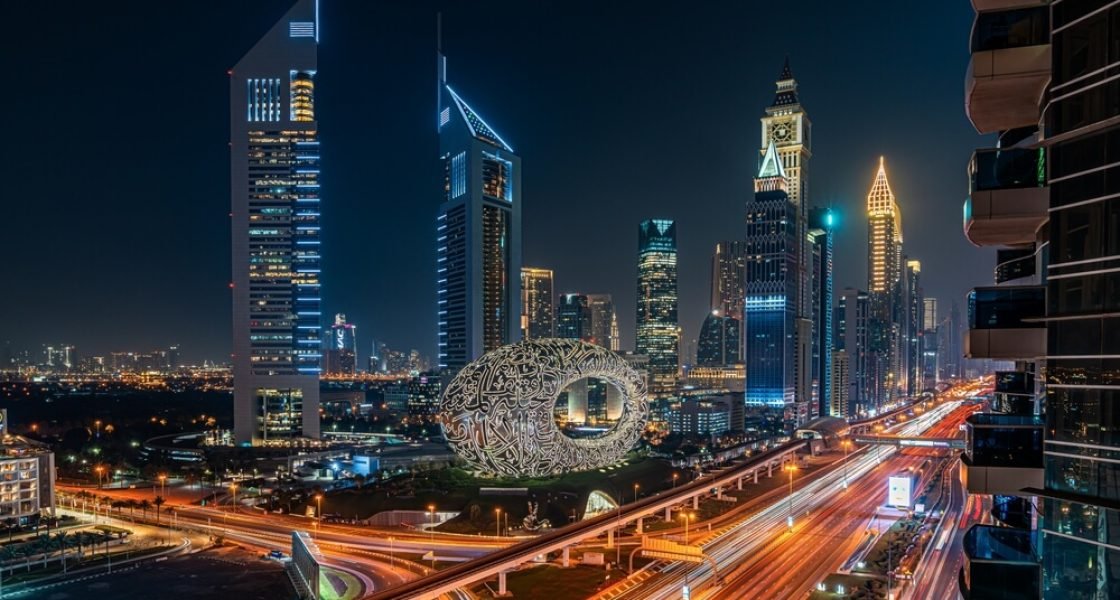
Dubai’s real estate market continues to capture global attention — not just for its iconic skyline and luxury lifestyle but for its record-breaking super-prime property sales. According to Arabian Business, the emirate saw villa transactions exceed AED 400 million in 2025, and this momentum is expected to carry into 2026, largely supported by an influx of wealthy buyers — especially from the UK.
1. The UK Wealth Exodus: A Major Growth Engine
One of the standout trends in Dubai’s property landscape is the migration of high-net-worth individuals (HNWIs) from the UK. Higher taxes, rising living costs, and more stringent financial regulations in the UK have encouraged affluent buyers to seek tax-efficient, cosmopolitan, and growth-oriented markets — and Dubai ticks all the right boxes.
British buyers — often paying in cash — have been particularly active in the ultra-luxury villa segment, targeting prestigious enclaves such as Emirates Hills, Palm Jumeirah and Jumeirah Bay Island. These areas have become hotspots for transactions well into the nine-figure range, rare in most global markets.
This trend mirrors broader data showing a net outflow of wealthy entrepreneurs from the UK, many relocating to jurisdictions offering better tax regimes and lifestyle benefits — with the UAE consistently ranked among the top destinations.
2. What’s Driving Demand in Dubai’s Luxury Segment?
a. Limited Supply + High Cash Demand
The top end of Dubai’s market has limited inventory — particularly for sizeable waterfront and landscaped villas. With significant demand from international buyers using cash capital rather than mortgages, competition for these assets remains high.
b. Wealth Migration from Beyond the UK
While British buyers are especially noticeable, wealthy families and investors from Europe, Australia and beyond are also relocating to the UAE, attracted by zero personal income tax, lifestyle incentives, and long-term residency schemes.
c. Population Growth & Economic Appeal
Dubai’s broader property market is also benefiting from rapid population growth and strong overall transaction volumes — overtaking record figures in 2025 and underpinning confidence across asset classes.
3. Super-Prime Is Just One Part of the Story
While ultra-luxury villa deals make headlines, Dubai’s broader real estate backdrop is multifaceted:
- Mid-market and mainstream segments remain active, with strong transaction volumes across apartments and townhouses.
- Rental demand is stabilizing but maintaining resilience, especially for luxury units.
- New housing supply is expected to grow significantly through to 2028, which could temper price rises in some segments.
This maturity in housing dynamics suggests a deepening market with room for both investment and end-user demand.
4. Outlook for Investors and Buyers
For investors eyeing Dubai’s real estate in 2026:
✔ Ultra-luxury remains strong: High net worth buyers with global mobility continue to fuel extraordinary transactions in elite enclaves.
✔ Diversification attracts capital: Dubai’s regulatory frameworks, lifestyle options, and strategic positioning as a global hub draw buyers beyond purely local buyers.
✔ Market fundamentals are resilient: Despite increased supply in the broader housing market, key drivers like population inflows and economic openness sustain confidence.
Dubai has cemented its global reputation not just as a tourist destination or business hub — but as a magnet for capital and high-net-worth individuals seeking opportunity, lifestyle, and financial efficiency.
As wealth migration patterns continue, and as international buyers look beyond traditional Western markets, Dubai’s super-prime residential segment is likely to remain one of the most closely watched real estate markets in the world heading into 2026 and beyond.